
Brain Health, Stroke and TIA
Co-designed patient information.
Co-designed patient information that helps people understand their risk, take action and make informed decisions about their health.
Developed with patients, carers and healthcare professionals, these brain health, stroke and Transient Ischaemic Attack (TIA) resources translate complex clinical information into clear, accessible and meaningful guidance. By involving the people who use the information, the leaflets support understanding, confidence and shared decision-making at every stage of the patient journey.
Created on behalf of Sheffield Teaching Hospitals and the South Yorkshire Integrated Stroke Delivery Network. Project Team: Dr Kirsty Harkness, Dr Naomi Chapman, Madeline Lamb, Helen Fisher.
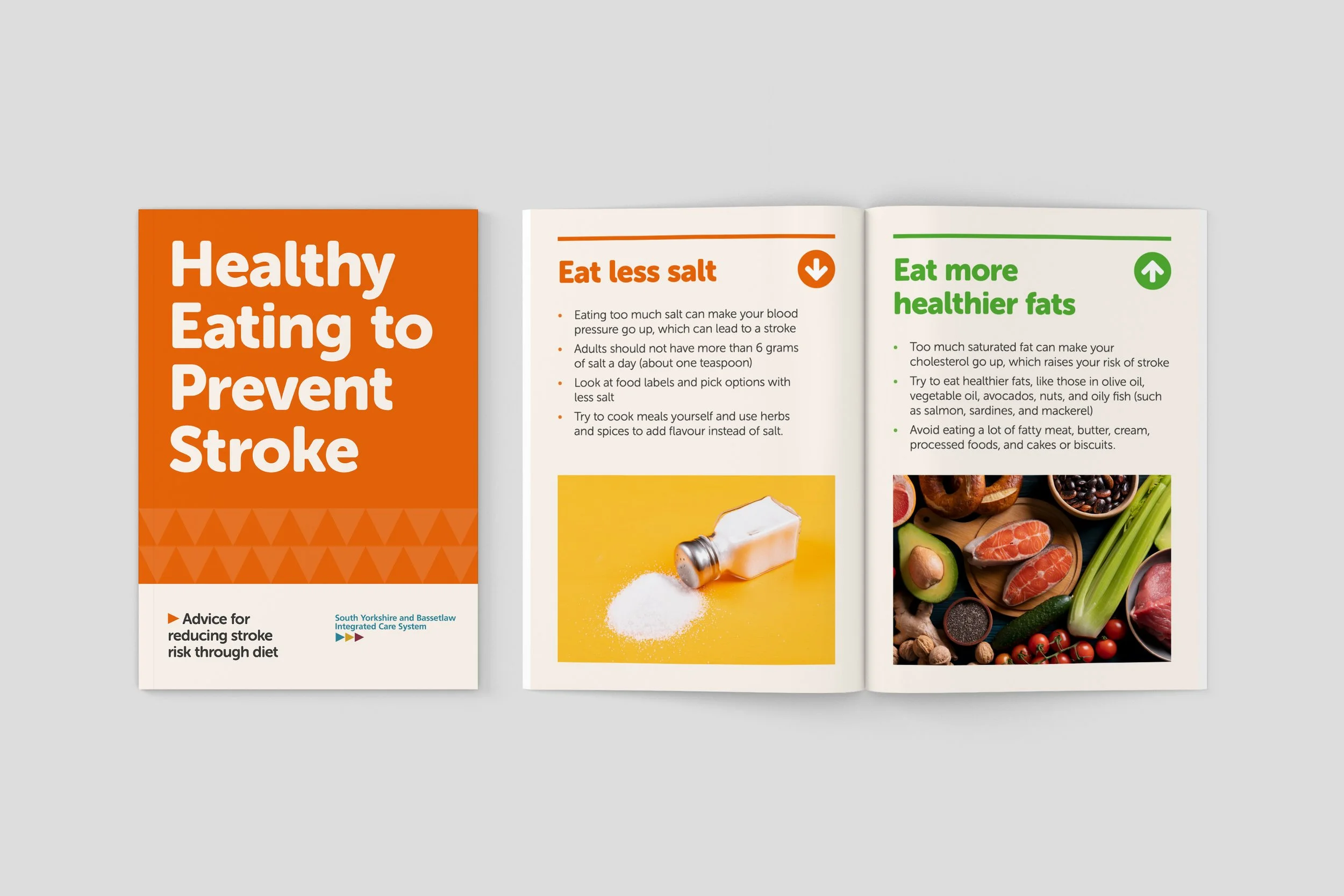
Downloads:
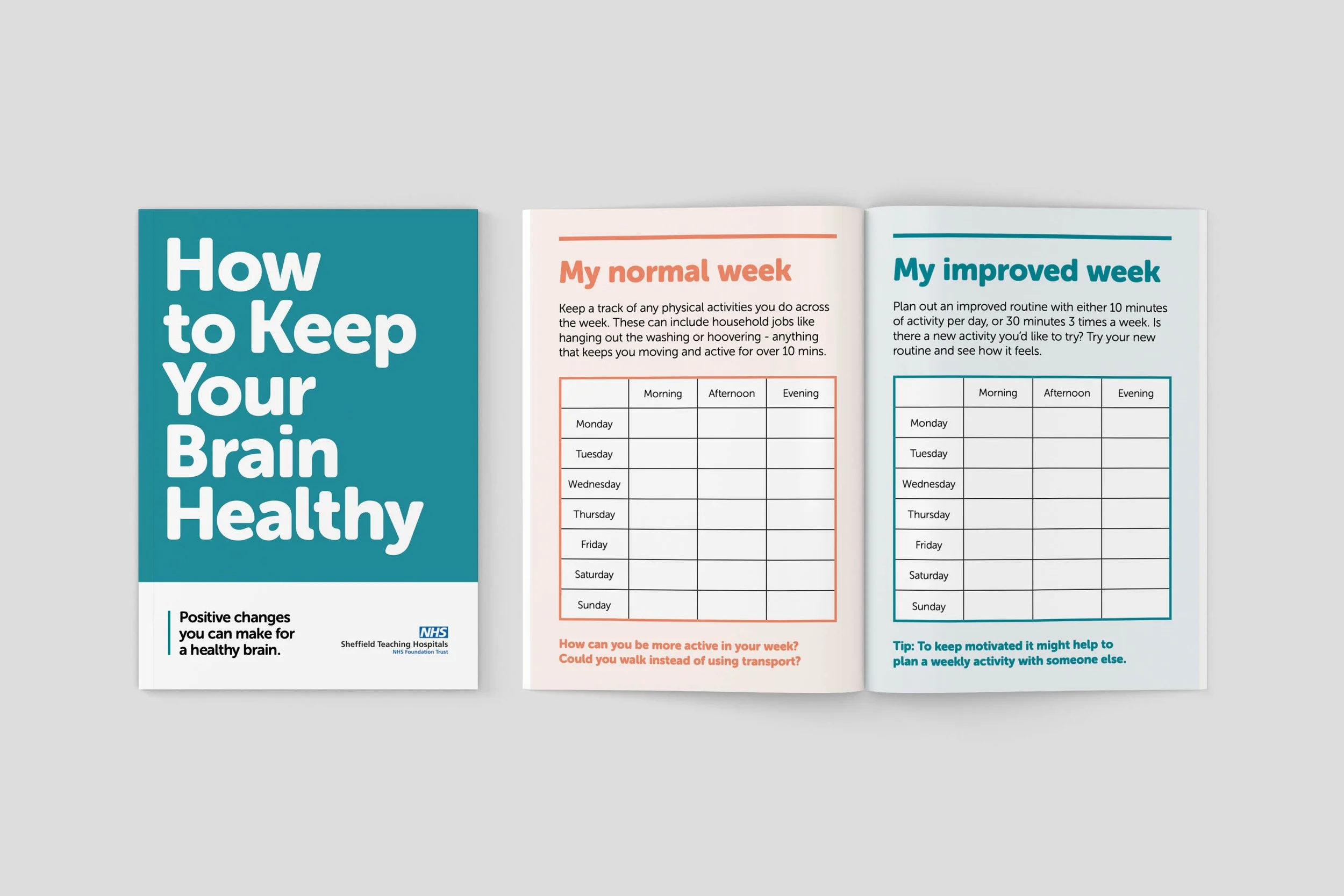
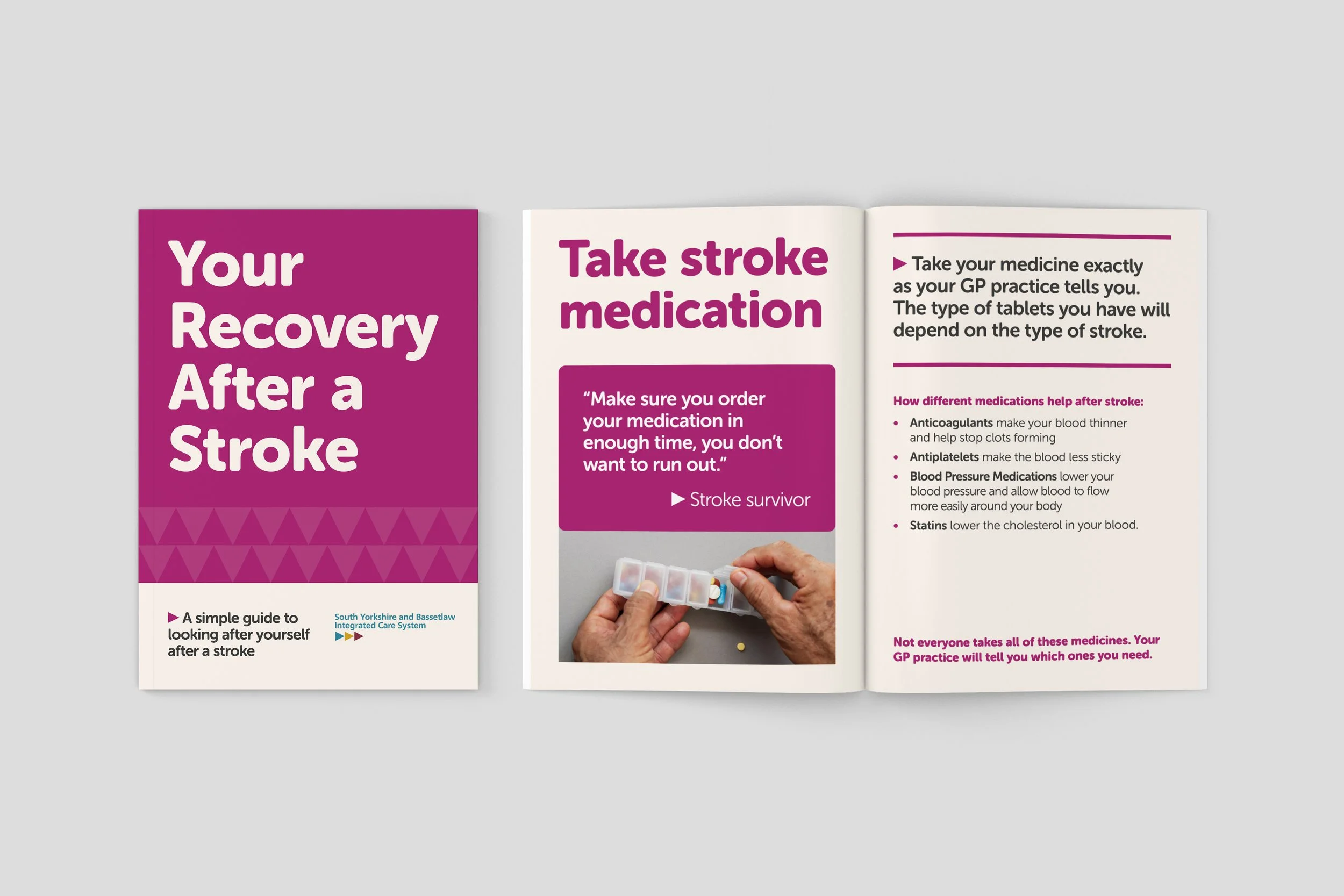
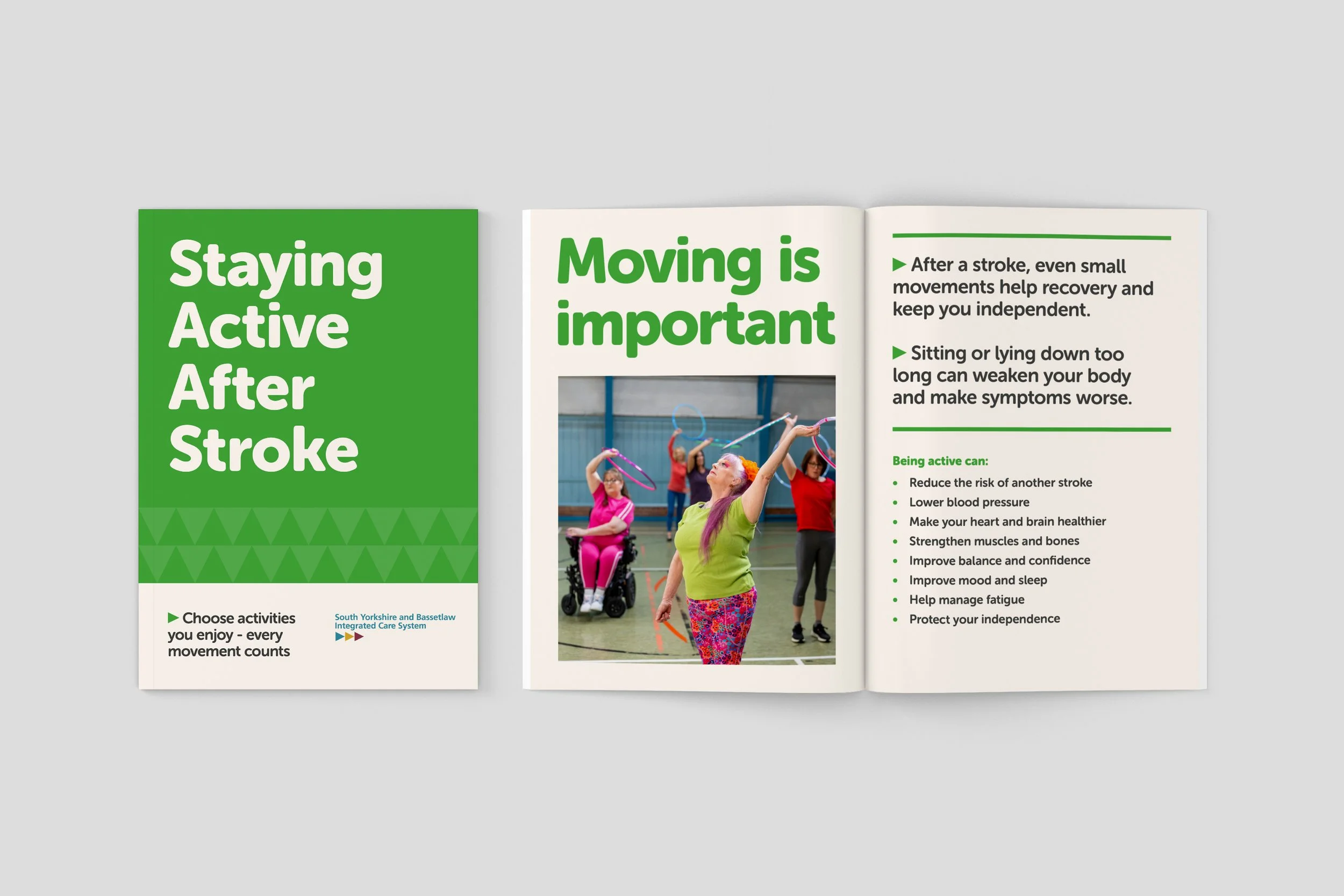
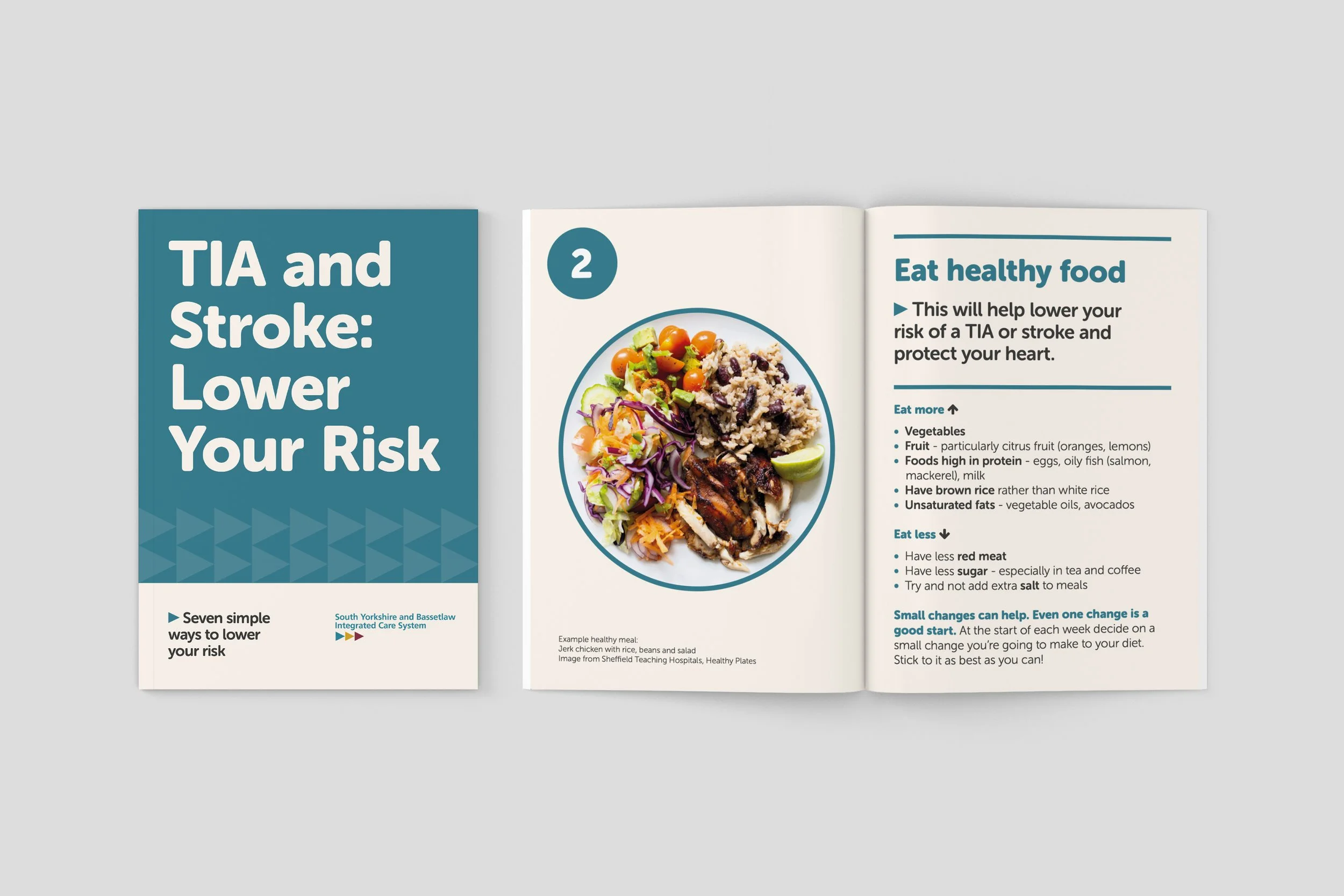
Images within the booklets are from royalty free sources: Freepik & the Age Without Limits age-positive image library. We’ve also included approved photographs from the Sheffield Teaching Hospitals, Healthy Plates project.
Identifying the Need
A review of existing resources highlighted a lack of visually engaging, culturally relevant patient information that had been co-designed with the communities most at risk of stroke and poor brain health outcomes.
Co-creation and Early Development
The brain health booklet was developed first through close collaboration with Age UK, ISRAAC Somali Community Association and Champion Cabs, ensuring the resource reflected the needs, experiences and preferences of communities identified as requiring additional support.
Input and Prototyping
The initial resource underwent multiple rounds of prototyping, testing and refinement with patients, community members and healthcare professionals, establishing a set of design criteria and co-design principles that informed the development of all subsequent leaflets. The design and leaflet layout was developed in collaboration with James at Lowe&Co bringing another perspective on clarity and accessibility.
Piloting and Wider Collaboration
Building on this foundation, the following four leaflets were developed through consultation and testing with a wider range of communities and specialists, including Voluntary Action Sheffield, Sheffield Diabetes Dietitians, Clinical Exercise Physiologists, South Yorkshire Integrated Stroke Delivery Network, South Yorkshire Stroke Survivor and Carer Panel with special thanks to Jane Douthwaite.
Design Principles
The co-design process consistently demonstrated the importance of clear and explicit imagery, diverse representation, supportive symbols and icons, plain language, strong information hierarchy and reducing cognitive load by limiting the amount of information presented on each page.
Across every stage of development, participants repeatedly emphasised that effective patient information should be easy to navigate, easy to understand and easy to act upon.
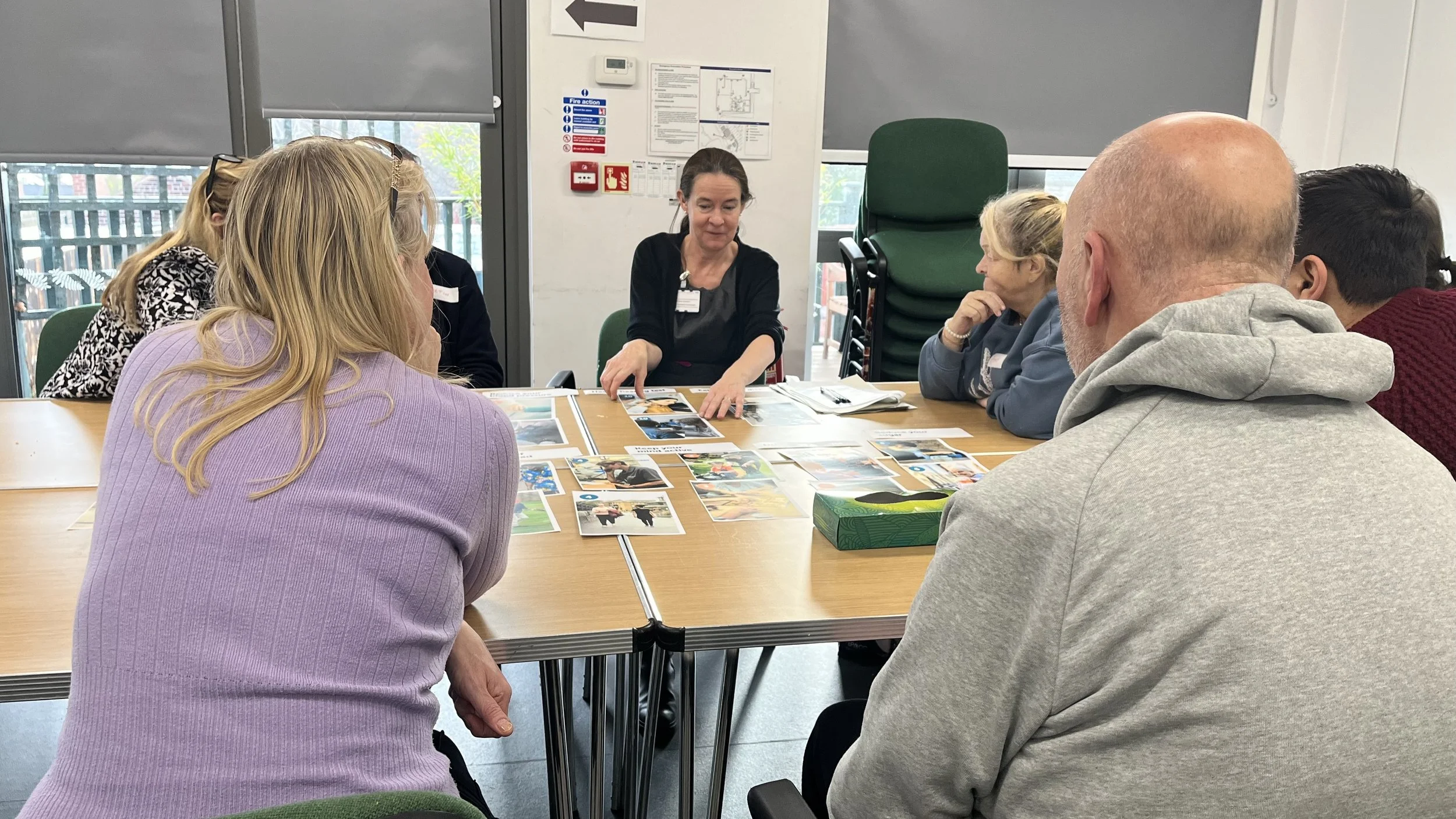
Dr Kirsty Harkness - Consultant Neurologist STH exploring imagery with AgeUK group
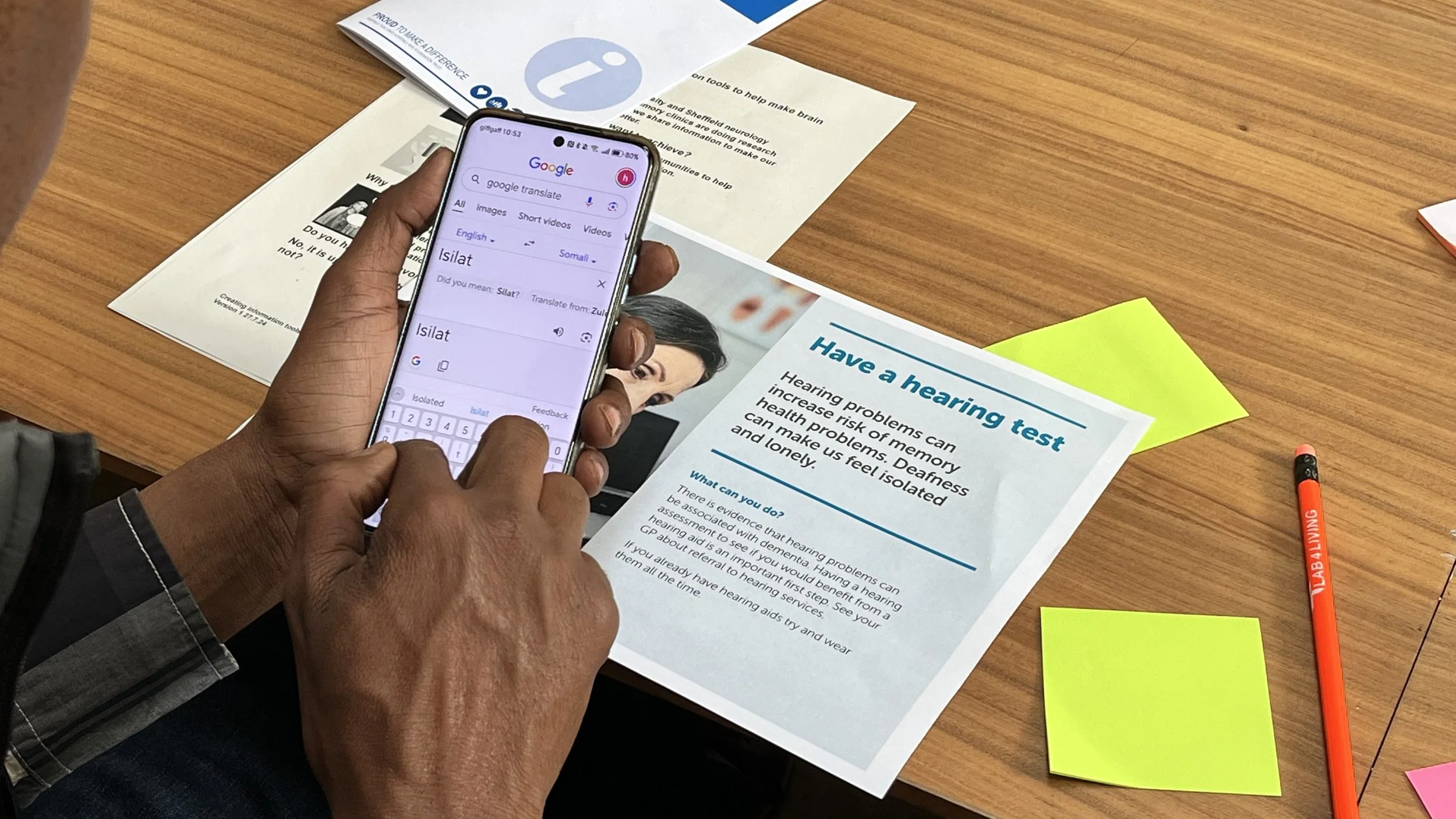
Person with lived experience using google translate